
What is the working principle of a PVC granulator? A complete guide.
Understanding the production process of PVC granules from raw materials to finished granules
PVC granules are widely used in the production of pipes, cable compounds, profiles, sheets, flooring, and other plastic products. A PVC granulator transforms PVC resin and additives into uniform granules, ensuring stable product quality and providing efficient power for subsequent processing.
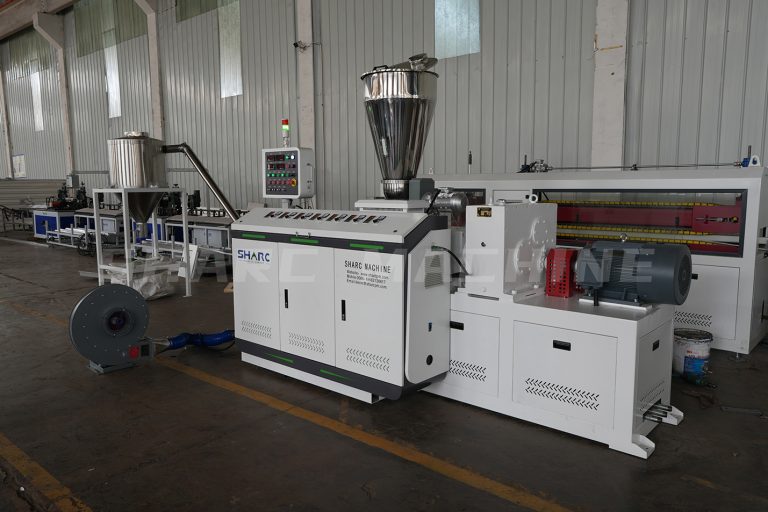
What is a PVC granulator?
A PVC granulator is a complete production line that mixes, melts, extrudes, cools, and cuts PVC material into uniform granules.
It is suitable for producing:
- PVC cable material
- PVC pipe material
- PVC profile material
- Flexible PVC material
- Rigid PVC material
- Recycled PVC granules
What is the working principle of a PVC granulator?
Step 1 – Raw Material Mixing
PVC resin, stabilizers, lubricants, fillers, and other additives are weighed and mixed according to the production formula.
A high-speed mixer mixes with the PVC raw materials.
Step 2 – Feeding
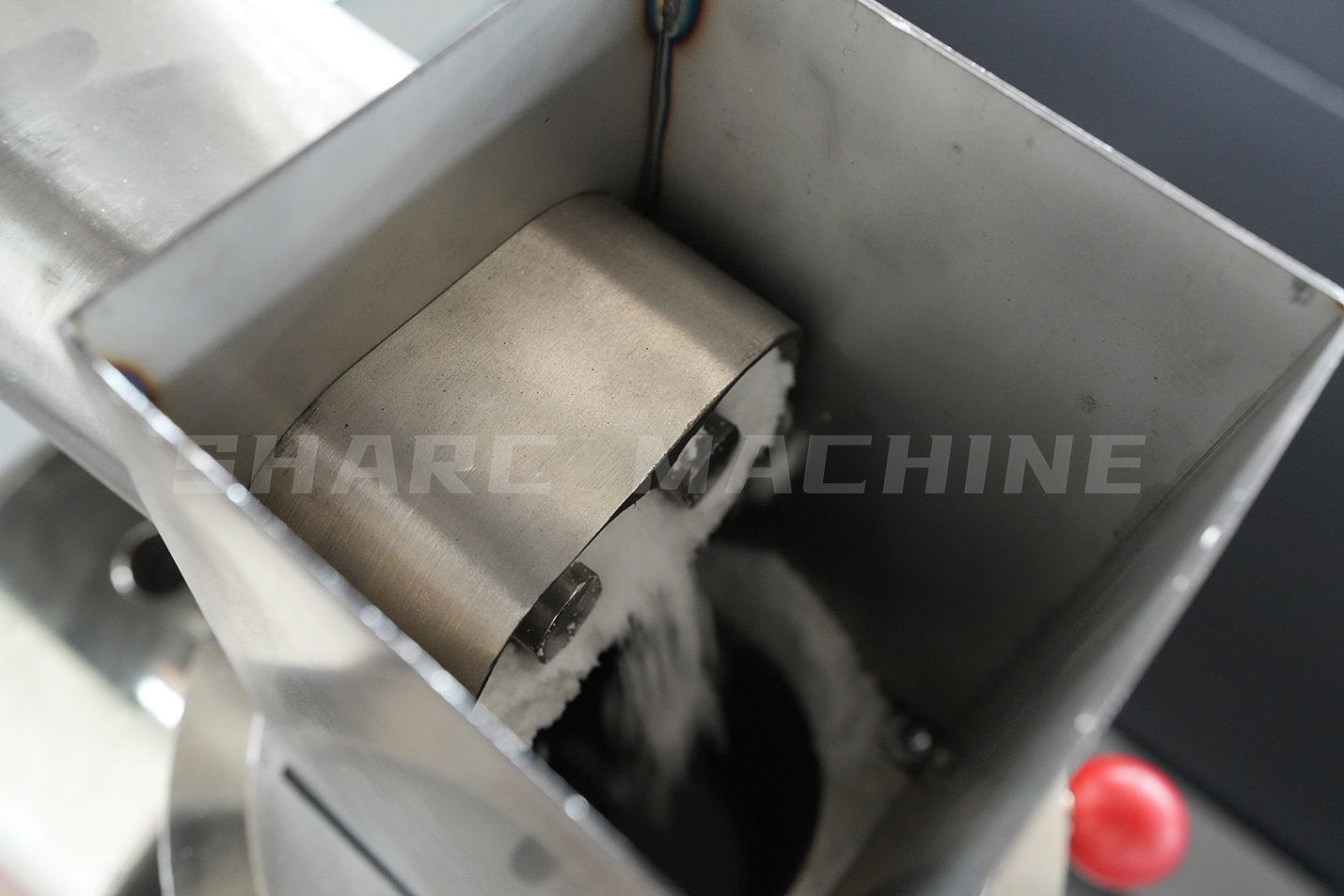
The mixed material is automatically fed into a twin-screw extruder through a feeding system.
Precise feeding ensures stable production and consistent output.
An automatic feeder connected to the extruder.
Step 3 – Plasticizing and Mixing
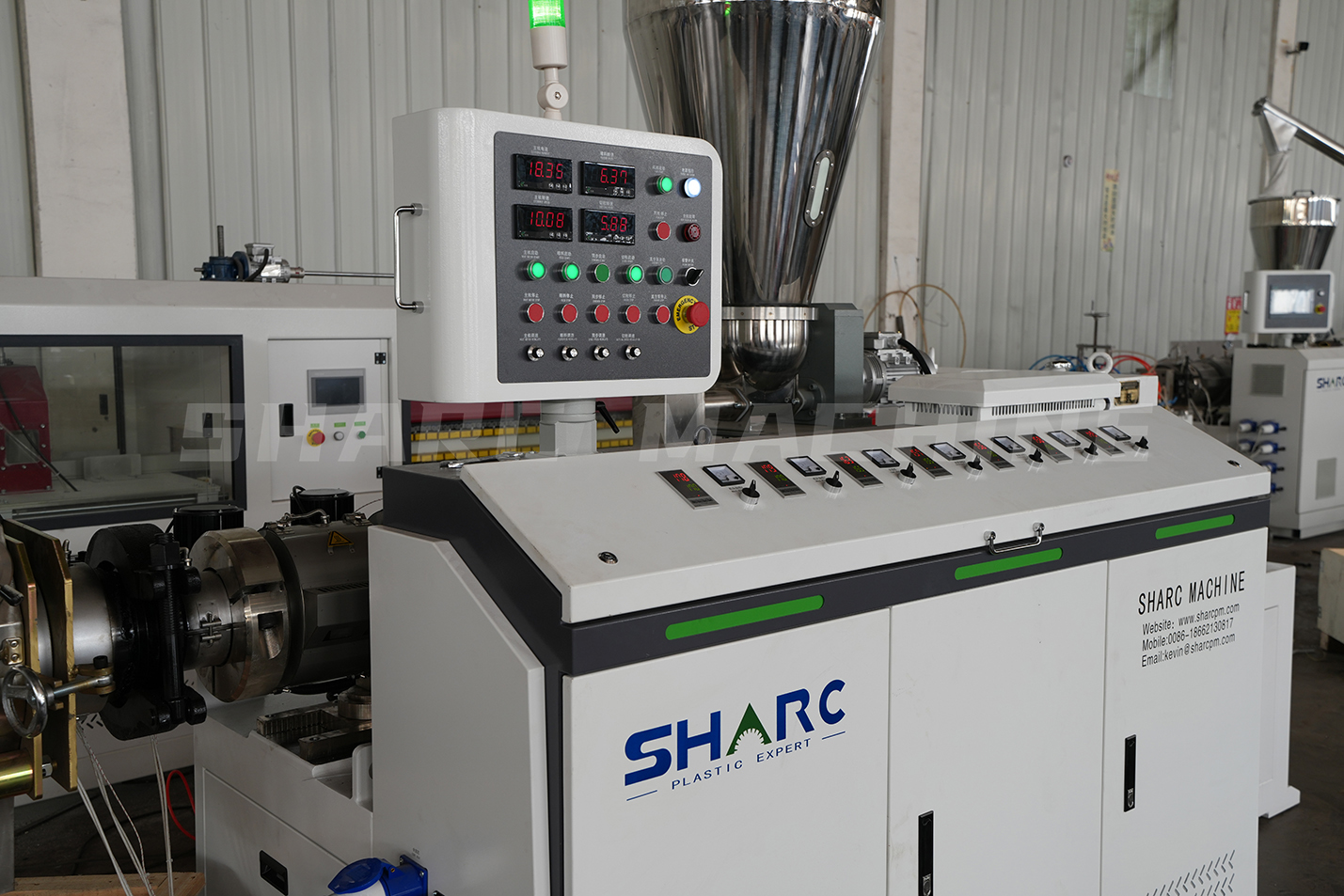
Inside the extruder, the material is heated and uniformly mixed.
During this stage, the screw:
- Melts the PVC
- Uniformly mixes the additives
- Expels air
- Establishes stable extrusion pressure
Step 4 – Extrusion
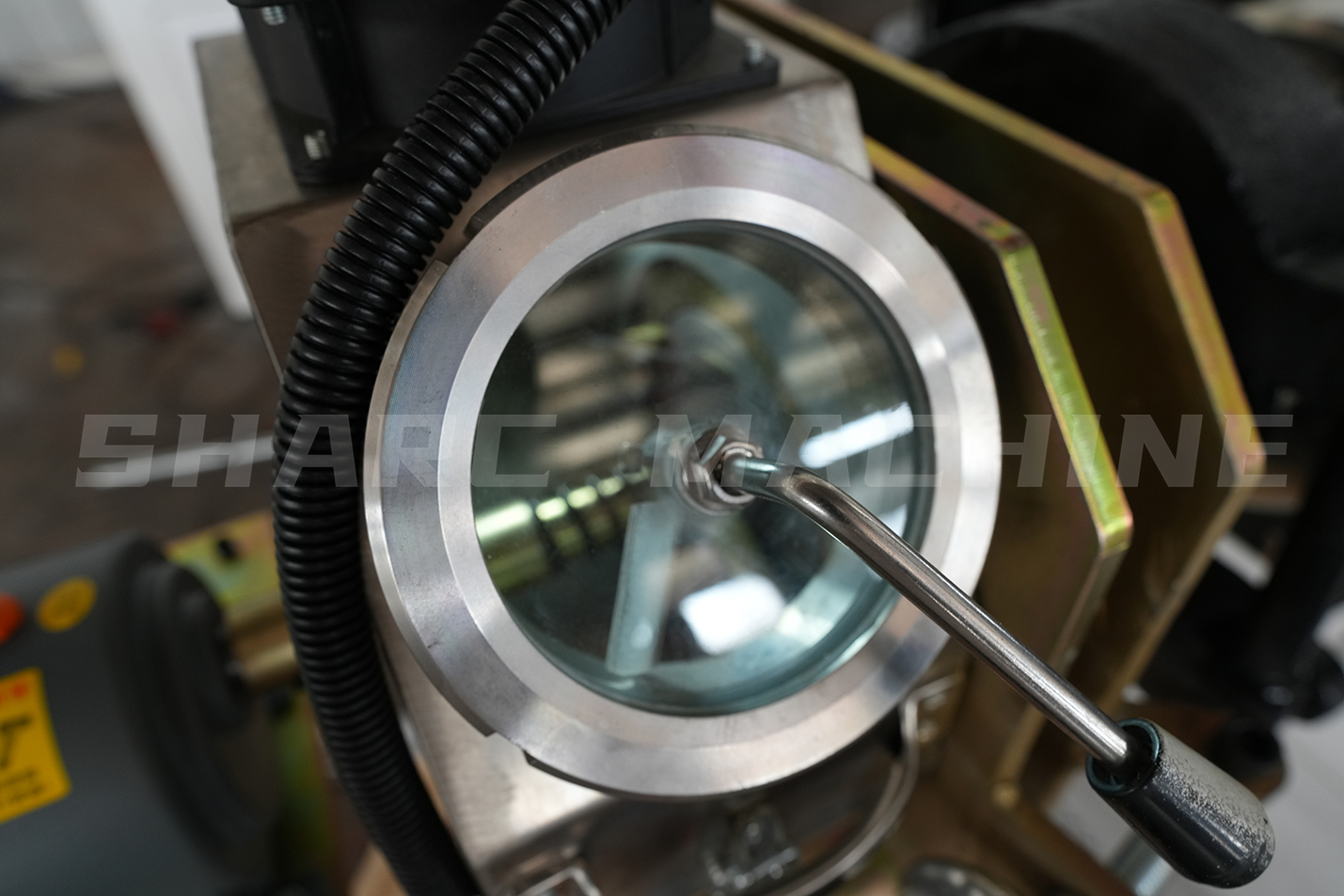
The molten PVC is extruded through the die to form continuous plastic filaments.
Stable die pressure helps maintain a consistent filament diameter.
Step 5 – Cooling
The filaments pass through a cooling tank before granulation.
Cooling methods include:
- Water bath cooling
- Water spray cooling
- Air cooling
Step 6 – Granulation
The cooled filaments enter the granulator and are cut into uniform PVC granules.
The finished granules are collected and packaged for storage or further processing.
Key Advantages
- High production efficiency
- Uniform pellet quality
- Excellent mixing performance
- Low energy consumption
- Stable and continuous operation
- Easy to automate
- Suitable for virgin and recycled PVC
PVC pellets produced by this pelletizer are widely used in:
- PVC pipes
- Cables
- Window frames
- Medical catheters
- Flooring
- Automotive parts
- Shoe soles
- Hoses
Common Problems and Solutions
Problem | Possible Cause | Solution |
Uneven pellet size | Worn pelletizer blades | Replace or adjust blades |
Rough pellet surface | Improper temperature setting | Optimize heating zones |
PVC discoloration | Excessive processing temperature | Reduce barrel temperature |
Low output | Feeding instability | Check feeder and screw speed |
Broken strands | Poor cooling or unstable pressure | Improve cooling and stabilize extrusion |
Excessive dust | Dull cutting blades | Sharpen or replace blades |
Material degradation | Long residence time | Optimize screw configuration and production speed |
Frequently Asked Questions (FAQ)
- What is a PVC granulator used for?
PVC granulators produce uniform PVC granules for manufacturing pipes, cables, profiles, sheets, flooring, medical products, and other plastic parts.
- Which extruder is best suited for PVC granulation?
Twin-screw extruders are generally preferred because they offer better mixing, more stable temperature control, and superior plasticizing properties.
- Can one machine process both rigid and flexible PVC?
Yes. By adjusting the formulation and process parameters, modern PVC granulation production lines can produce both rigid PVC (PVC-U) and flexible PVC compounds.
- What is the typical production capacity?
Depending on the model, production capacity typically ranges from 100 kg/h to over 1000 kg/h.
- Why is particle size consistency important?
Uniform particles improve feed stability during extrusion, reduce material waste, and help maintain consistent product quality.
- How often should granulator blades be replaced? Blade replacement frequency depends on production volume and material type. Regular inspections are recommended to maintain clean and uniform granules.
- Can recycled PVC be processed?
Yes. Many PVC pelletizing lines are designed to process recycled PVC materials while maintaining consistent granule quality.
Conclusion
- PVC granulators are a key solution for producing high-quality PVC compounds. Through efficient mixing, stable extrusion, reliable cooling, and precise cutting, manufacturers can achieve consistent granule quality, higher production efficiency, and lower production costs.
- Whether producing virgin or recycled PVC compounds, choosing the right granulation equipment helps improve production efficiency and supports the long-term development of the business.