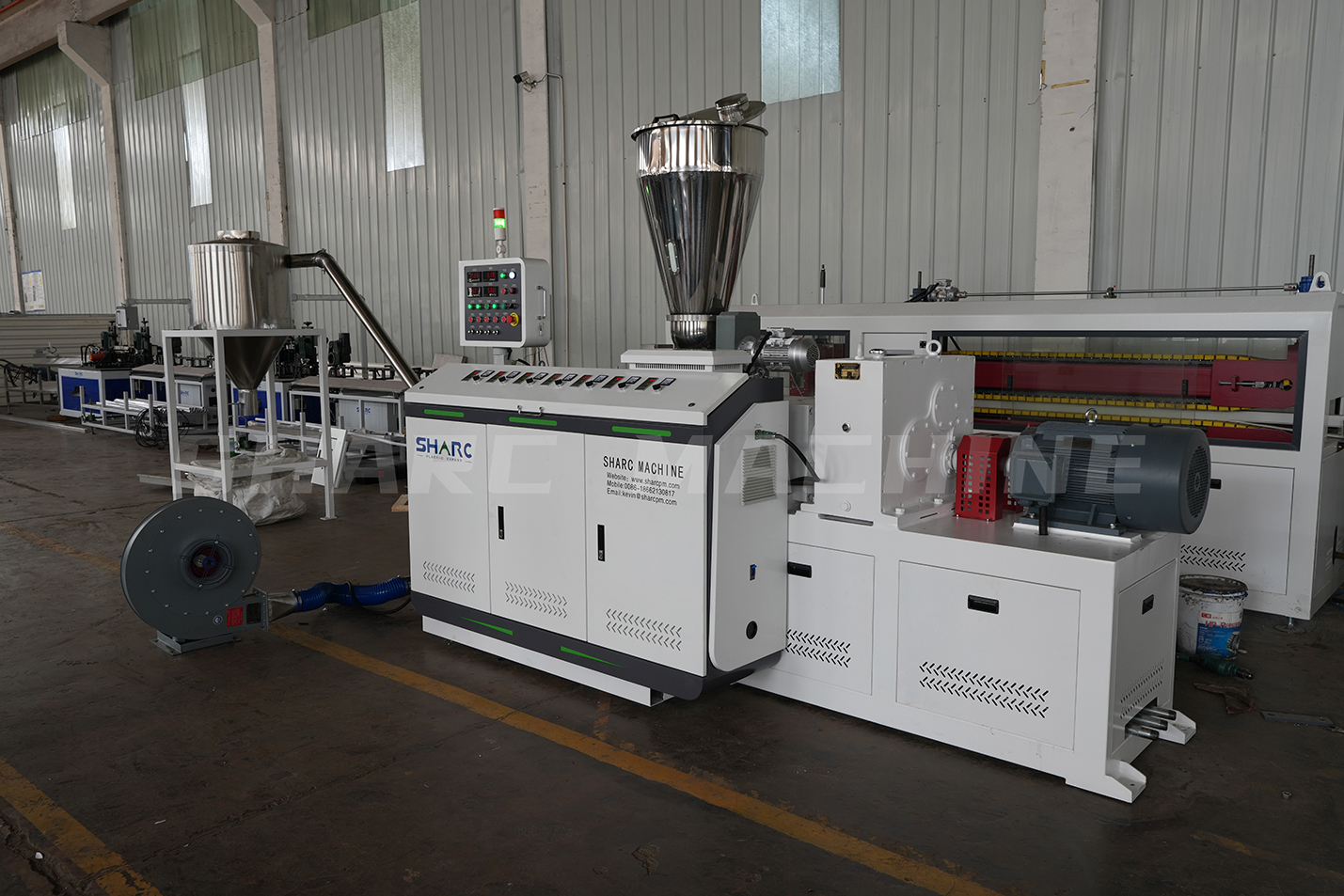
PVC vs PE vs PP in Plastic Profile Extrusion
Plastic profile extrusion is a widely used manufacturing process for producing products with continuous cross-sectional shapes, such as window frames, cable channels, wall panels, trims, decking boards, and various industrial components. The choice of material plays a crucial role in determining product performance, production efficiency, and overall manufacturing costs.
Among the many thermoplastics available, Polyvinyl Chloride (PVC), Polyethylene (PE), and Polypropylene (PP) are three of the most commonly used materials for profile extrusion. While all three can be processed using similar extrusion equipment, their properties, processing characteristics, and end-use applications differ significantly. Understanding these differences helps manufacturers choose the right material for specific projects.
Why Material Selection Matters in Profile Extrusion
In profile extrusion, the material affects nearly every aspect of production and product performance. Factors such as melt flow behavior, cooling characteristics, dimensional stability, weather resistance, impact strength, and cost all influence the final result.
A profile designed for outdoor construction, for example, may require excellent UV resistance and rigidity, while a profile used in industrial protection systems may need superior impact resistance and flexibility. Selecting the wrong material can lead to higher production costs, quality issues, or reduced product lifespan.
For this reason, PVC, PE, and PP are often compared when designing new extrusion profiles.
A profile designed for outdoor construction, for example, may require excellent UV resistance and rigidity, while a profile used in industrial protection systems may need superior impact resistance and flexibility. Selecting the wrong material can lead to higher production costs, quality issues, or reduced product lifespan.
For this reason, PVC, PE, and PP are often compared when designing new extrusion profiles.
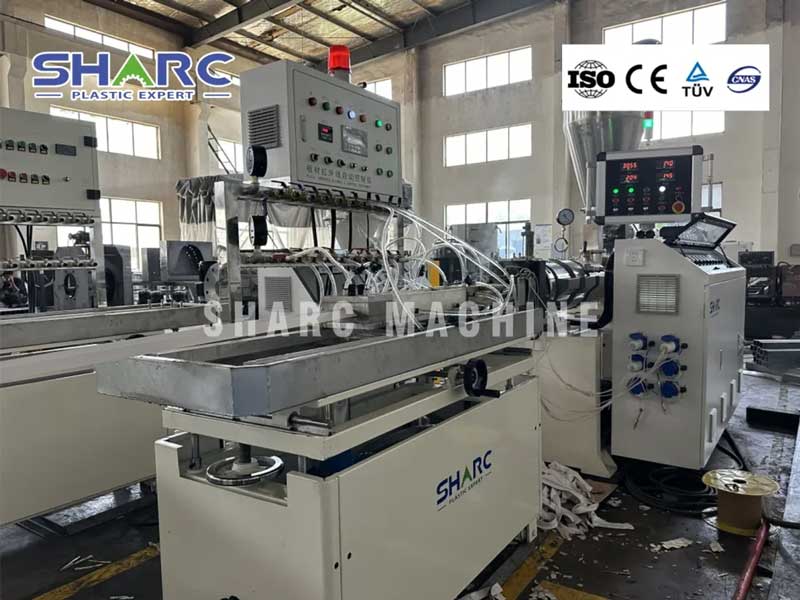
PVC: The Industry Standard for Building Profiles
PVC remains one of the most widely used materials in profile extrusion, particularly in the construction sector. It is commonly found in window and door frames, wall cladding, cable trunking, fencing systems, decorative trims, and many other building products.
One of PVC’s biggest advantages is its high rigidity. Compared with PE and PP, rigid PVC provides excellent dimensional stability, allowing profiles to maintain their shape even under long-term loading conditions. This makes it especially suitable for structural applications. PVC also offers excellent weather resistance and natural flame-retardant properties. Unlike many other plastics, PVC does not easily support combustion, which is a significant benefit for building materials and electrical applications.
Another reason for its popularity is cost-effectiveness. PVC compounds are generally affordable and can be easily modified with additives to improve impact strength, UV resistance, and processing performance. However, PVC requires careful processing. The material is sensitive to excessive heat, and improper temperature control can lead to degradation, discoloration, and reduced product quality.
Manufacturers often rely on stabilizers, lubricants, and processing aids to ensure smooth production.
One of PVC’s biggest advantages is its high rigidity. Compared with PE and PP, rigid PVC provides excellent dimensional stability, allowing profiles to maintain their shape even under long-term loading conditions. This makes it especially suitable for structural applications. PVC also offers excellent weather resistance and natural flame-retardant properties. Unlike many other plastics, PVC does not easily support combustion, which is a significant benefit for building materials and electrical applications.
Another reason for its popularity is cost-effectiveness. PVC compounds are generally affordable and can be easily modified with additives to improve impact strength, UV resistance, and processing performance. However, PVC requires careful processing. The material is sensitive to excessive heat, and improper temperature control can lead to degradation, discoloration, and reduced product quality.
Manufacturers often rely on stabilizers, lubricants, and processing aids to ensure smooth production.
PE: Superior Toughness and Moisture Resistance
Polyethylene is known for its toughness and flexibility. In profile extrusion, HDPE (High-Density Polyethylene) is the most commonly used grade because it offers a good balance between strength and impact resistance.
PE profiles are widely used in outdoor products, protective barriers, agricultural systems, cable protection applications, and wood-plastic composite products. The material performs particularly well in environments exposed to moisture.
One of the most valuable characteristics of PE is its excellent impact resistance. Even at low temperatures, PE can withstand significant mechanical stress without cracking. This makes it an ideal choice for applications that may experience rough handling or harsh weather conditions. PE also provides excellent chemical resistance and virtually no water absorption. Products exposed to rain, humidity, or marine environments often benefit from these properties.
From a processing perspective, PE is generally easier to extrude than PVC. It has a relatively wide processing window and stable melt behavior, which helps reduce production difficulties.
The primary drawback of PE is its lower rigidity. Compared with PVC and PP, PE profiles are more likely to deform under heavy loads or elevated temperatures. In applications requiring high dimensional stability, this limitation must be considered.
PE profiles are widely used in outdoor products, protective barriers, agricultural systems, cable protection applications, and wood-plastic composite products. The material performs particularly well in environments exposed to moisture.
One of the most valuable characteristics of PE is its excellent impact resistance. Even at low temperatures, PE can withstand significant mechanical stress without cracking. This makes it an ideal choice for applications that may experience rough handling or harsh weather conditions. PE also provides excellent chemical resistance and virtually no water absorption. Products exposed to rain, humidity, or marine environments often benefit from these properties.
From a processing perspective, PE is generally easier to extrude than PVC. It has a relatively wide processing window and stable melt behavior, which helps reduce production difficulties.
The primary drawback of PE is its lower rigidity. Compared with PVC and PP, PE profiles are more likely to deform under heavy loads or elevated temperatures. In applications requiring high dimensional stability, this limitation must be considered.
PP: Lightweight with Excellent Heat Resistance
Polypropylene offers a balance between the rigidity of PVC and the toughness of PE. It is commonly used for automotive components, industrial profiles, furniture parts, packaging systems, and lightweight structural products.
One of the key advantages of PP is its excellent stiffness-to-weight ratio. Because PP has a lower density than both PVC and PE, manufacturers can produce lighter profiles without sacrificing mechanical performance. PP also performs well in higher-temperature environments. It can withstand operating temperatures that would cause PE to soften, making it suitable for applications where heat resistance is important.
Another notable characteristic is its fatigue resistance. PP can endure repeated bending and flexing without failure, which is beneficial for products exposed to continuous movement or stress cycles.
Despite these advantages, PP has some limitations. It tends to become more brittle in cold conditions than PE, and its higher shrinkage rate can make dimensional control more challenging during extrusion. For outdoor applications, UV stabilizers are often required to prevent long-term degradation from sunlight exposure.
One of the key advantages of PP is its excellent stiffness-to-weight ratio. Because PP has a lower density than both PVC and PE, manufacturers can produce lighter profiles without sacrificing mechanical performance. PP also performs well in higher-temperature environments. It can withstand operating temperatures that would cause PE to soften, making it suitable for applications where heat resistance is important.
Another notable characteristic is its fatigue resistance. PP can endure repeated bending and flexing without failure, which is beneficial for products exposed to continuous movement or stress cycles.
Despite these advantages, PP has some limitations. It tends to become more brittle in cold conditions than PE, and its higher shrinkage rate can make dimensional control more challenging during extrusion. For outdoor applications, UV stabilizers are often required to prevent long-term degradation from sunlight exposure.
Comparing Processing Performance
Although PVC, PE, and PP can all be extruded into profiles, they behave differently during processing.
PVC requires the most precise temperature control because of its sensitivity to thermal degradation. Successful PVC extrusion depends heavily on proper screw design, formulation, and processing conditions. PE is generally regarded as the easiest material to process. Its forgiving nature allows stable production across a wider range of operating conditions, making it attractive for high-volume manufacturing.
PP requires higher processing temperatures than both PVC and PE. It also experiences greater shrinkage during cooling, which means calibration and cooling systems must be carefully designed to achieve consistent dimensions.
For manufacturers focused on production simplicity, PE often offers the easiest processing experience, while PVC demands the greatest level of control.
PVC requires the most precise temperature control because of its sensitivity to thermal degradation. Successful PVC extrusion depends heavily on proper screw design, formulation, and processing conditions. PE is generally regarded as the easiest material to process. Its forgiving nature allows stable production across a wider range of operating conditions, making it attractive for high-volume manufacturing.
PP requires higher processing temperatures than both PVC and PE. It also experiences greater shrinkage during cooling, which means calibration and cooling systems must be carefully designed to achieve consistent dimensions.
For manufacturers focused on production simplicity, PE often offers the easiest processing experience, while PVC demands the greatest level of control.
Performance Comparison in Real-World Applications
When evaluating finished product performance, each material has clear strengths.
PVC is typically the best choice when rigidity, weather resistance, fire performance, and dimensional stability are priorities. This explains its dominance in window profiles, wall panels, and building products.
PE excels in applications requiring toughness, impact resistance, and moisture protection. Outdoor recreational products, agricultural systems, and protective profiles often benefit from PE’s durability.
PP becomes particularly attractive when lightweight construction and heat resistance are important. Automotive and industrial manufacturers frequently choose PP to reduce product weight while maintaining sufficient strength.
Rather than asking which material is universally better, manufacturers should focus on which material best matches the demands of the specific application.
PVC is typically the best choice when rigidity, weather resistance, fire performance, and dimensional stability are priorities. This explains its dominance in window profiles, wall panels, and building products.
PE excels in applications requiring toughness, impact resistance, and moisture protection. Outdoor recreational products, agricultural systems, and protective profiles often benefit from PE’s durability.
PP becomes particularly attractive when lightweight construction and heat resistance are important. Automotive and industrial manufacturers frequently choose PP to reduce product weight while maintaining sufficient strength.
Rather than asking which material is universally better, manufacturers should focus on which material best matches the demands of the specific application.
Cost and Long-Term Value
Material cost is always an important consideration in extrusion projects. PVC is often viewed as one of the most economical solutions for rigid profiles, especially in construction applications.
PE provides excellent value when durability and impact resistance are required, while PP can offer material savings due to its lower density and lighter weight. However, the true cost of a profile extends beyond raw material prices. Processing efficiency, maintenance requirements, service life, transportation costs, and recyclability all contribute to the overall economics of a product.
A material with a slightly higher purchase price may ultimately deliver better long-term value through improved performance and reduced replacement costs. Conclusion PVC, PE, and PP each offer distinct advantages in plastic profile extrusion. PVC remains the preferred choice for many construction-related profiles because of its rigidity, weather resistance, and cost-effectiveness. PE stands out for its exceptional toughness, impact resistance, and moisture resistance, making it ideal for demanding outdoor environments. PP provides a unique combination of lightweight performance, stiffness, and heat resistance that suits many industrial and automotive applications.
The most successful extrusion projects begin with a clear understanding of material properties and application requirements. By carefully matching the characteristics of PVC, PE, or PP to the intended use, manufacturers can achieve higher product quality, improved production efficiency, and better long-term performance.
PE provides excellent value when durability and impact resistance are required, while PP can offer material savings due to its lower density and lighter weight. However, the true cost of a profile extends beyond raw material prices. Processing efficiency, maintenance requirements, service life, transportation costs, and recyclability all contribute to the overall economics of a product.
A material with a slightly higher purchase price may ultimately deliver better long-term value through improved performance and reduced replacement costs. Conclusion PVC, PE, and PP each offer distinct advantages in plastic profile extrusion. PVC remains the preferred choice for many construction-related profiles because of its rigidity, weather resistance, and cost-effectiveness. PE stands out for its exceptional toughness, impact resistance, and moisture resistance, making it ideal for demanding outdoor environments. PP provides a unique combination of lightweight performance, stiffness, and heat resistance that suits many industrial and automotive applications.
The most successful extrusion projects begin with a clear understanding of material properties and application requirements. By carefully matching the characteristics of PVC, PE, or PP to the intended use, manufacturers can achieve higher product quality, improved production efficiency, and better long-term performance.